Browsing Category

Self

Favorite books of 2012

December 26, 2012
Overall, this has been a great year for reading, right? I read so many good books in 2012, I had trouble paring them down for this list. (Sorry, Gone Girl. But you made so many other lists!)

I love that I have the luxury of reading again. When I worked for newspapers, it was a challenge to even read one book a month. I think I just got so full on words while I was at work — I was surrounded by websites, magazines, newspapers, Twitter feeds, etc. — the last thing I wanted to do was pick up a book when I got home.

Now that I am in grad school, though, I am required to read, and I relish every second of it. When I tuck myself on the couch for a few hours to consume a book, it feels like the biggest scam in the world. Turn off the phone! Tell the husband to be quiet! I’m doing my schoolwork! I only wish I would have gone back to school years ago.

Anyway, these were my favorite books this year. Keep in mind that not all of these books were published in 2012 — they were just books I happened to enjoy this year.

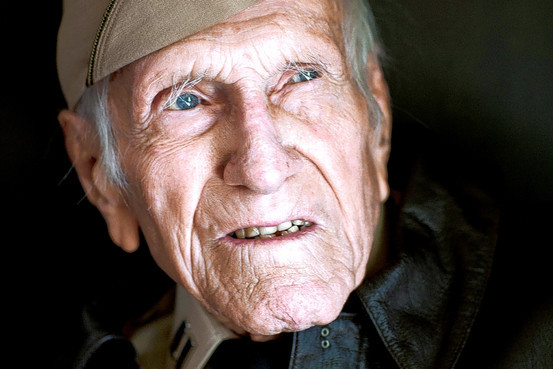
Unbroken by Laura Hillenbrand — I resisted reading this for a long time, probably because my dad recommended it. But sometimes dear ol’ dad knows what he’s talking about.

This is the true story of a Southern California long distance runner who became an Olympian, then joined the military during World War II. That’s when this book starts to sound like fiction. Every time you think this guy’s story can’t get worse, it does. He and two of his crewmates survive a plane crash into the Pacific … and then they live on a life raft for 47 days … and then passing planes shoot and deflate the raft … and then they are captured by the Japanese. And it only gets worse from there. (I’m not spoiling anything, by the way. All of that happens in the introduction.)

Do they make people this tough anymore?
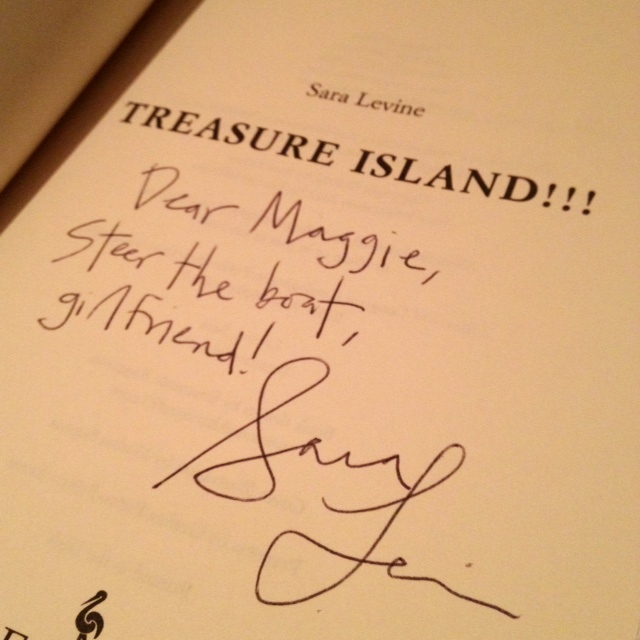
Treasure Island!!! by Sara Levine — No, not the swashbuckling classic. This is the story of a misguided 25-year-old woman who becomes obsessed with “Treasure Island” and uses it as a self-help book. It’s completely ridiculous, and the protagonist is completely unlikeable, but it’s completely funny.

And look — Sara Levine was a guest at my MFA program residency recently, and she signed my copy. (You’ll just have to read the book if you want to know what she means by “Steer the boat, girlfriend!”)
Columbine by Dave Cullen — I am downright awed by Cullen’s research. Yeah, I was a journalist for 13 years, but I’m not worthy enough to hold Cullen’s notebook. His work is amazing, and this is an important book. After the shooting in Newtown, it feels even more deeply profound.

Damascus by Joshua Mohr — A story about a San Francisco bar and its regulars — the misfits, the losers and the people who just want to be loved.

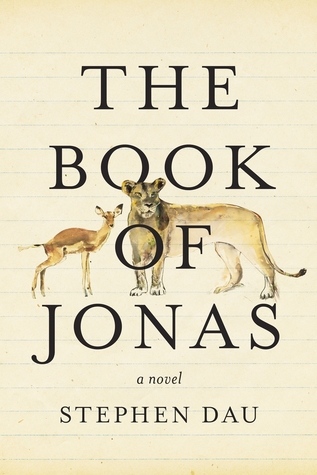
The Book of Jonas by Stephen Dau — A novel about a young Muslim boy who is saved by U.S. troops after his village is destroyed during an American military attack. The story is told in little patchwork pieces, sewn together into a meditation on the nature of trauma, memory and guilt. It’s a really beautiful and thoughtful book that poses many unanswerable questions. I read this many months ago, and I still think about it all the time.
The Sisters Brothers by Patrick DeWitt — Two words: Cowboy hitmen.

Undress Me in the Temple of Heaven by Susan Jane Gilman — Travel memoir is probably my favorite genre, and this is a good one. The author and a friend backpacked through China in 1986, just after the country opened for tourists. It’s an interesting look at a nation in transition. But it’s also a bizarre and funny story about choosing the wrong travel companion.

Wild by Cheryl Strayed — This is a story of a woman, a trail and learning to put one foot in front of the other after grief, regret and mistakes. It took me a long time to read this book, not because it was difficult or too long, but because so many of the passages were too beautiful to consume at once.

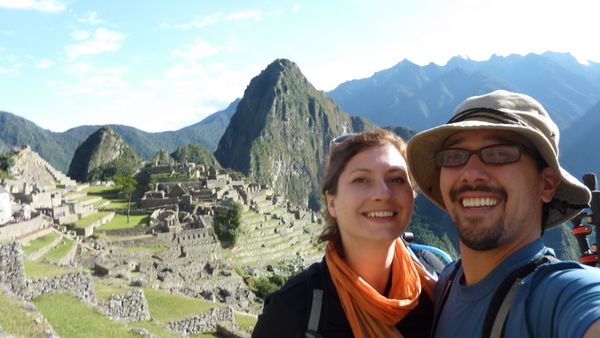
Also, I am a firm believer that hiking long distances can make your life better. See?
Daughter of Smoke and Bone by Laini Taylor — This is a young adult fantasy novel about an angel and a demon who fall in love. It sounds Twilight-y, but it’s really not. Taylor’s writing is stunning, and she invented a truly unique world with a brave, young female protagonist.

Beautiful Ruins by Jess Walter — I loved everything about this book. Walter created complex and flawed characters, and their stories intersect in the most bizarre, wonderful ways.
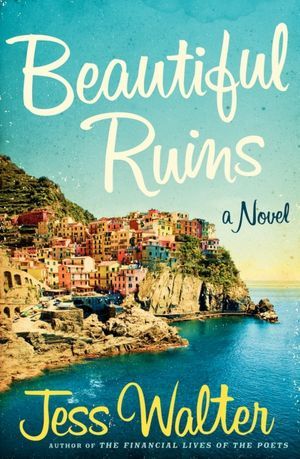
His descriptions of Cinque Terre were so vivid that when I was in Italy, I made a detour just to see the place for myself. It was worth it.
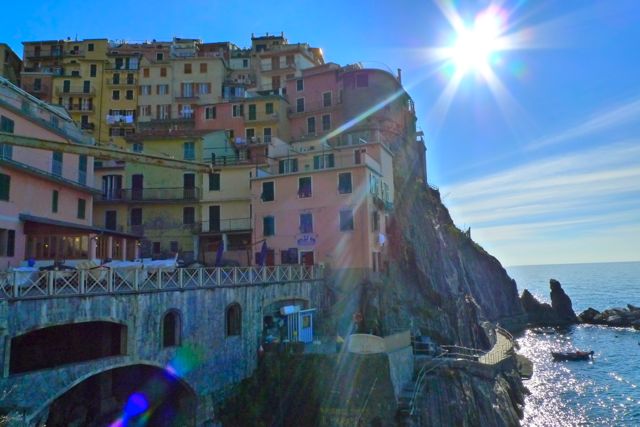
Shameless plug: If you’re in the Coachella Valley area, Jess Walter will be doing a reading/talk at my work! He’ll be at UCR Palm Desert at 6:30 p.m. Feb. 20 — and I can’t even begin to explain how excited I am about that. If you hear someone in the back of the room, shrieking as if she’s at a New Kids on the Block concert? That’ll be me. The event is free, but space is limited. RSVP here.
Travel, ‘The Way’ & talking politics on a Ugandan street corner

August 11, 2012


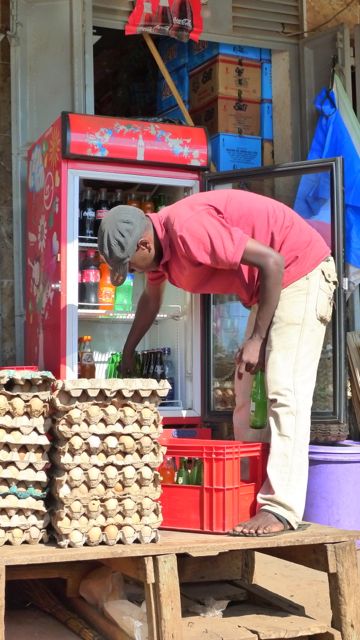
“Your George Bush had it right,” said John. His voice was deep and dark as blackstrap molasses.

“Whoa,” I said. “He is not my George Bush.”

John was a stranger. Just someone who offered to sit with me for a soda.

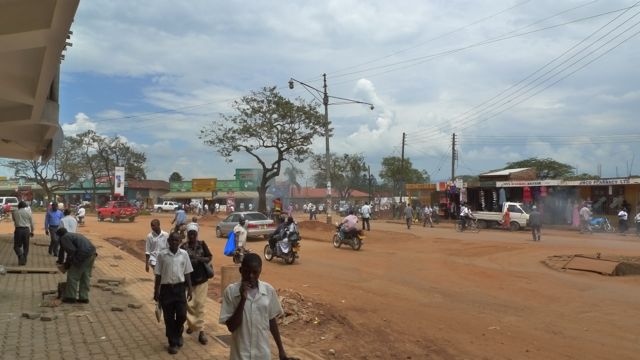
The table between us was flimsy red plastic, bleached pink by the sun. A nearby vendor sold sachets of drinking water. Salespeople squatted near sacks of potatoes. The air trembled from the sound of voices, feet, traffic.


“I mean to say, the George Bush of your country knows how to be a leader.”

“Oh?”

The concrete sidewalks were packed so thick with orange dust, you’d think they were dirt. A constant stream of scooters flowed down the street.

“Yes, George W. Bush knows the quickest way to make people happy and safe is to take away freedom,” John said. “He gives the people no choices.”

“I like having choices.”

“You Americans,” he shook his head. “The problem is that you have too much freedom.”

John tilted his chair, balanced on the two back legs. He lifted a glass bottle to his mouth and took a mighty swig of Coca-Cola. He swallowed audibly, then let out a long, “Ahhhh …”

I laughed. A Ugandan man giving me his take on America’s problems, pausing to take a big gulp from the most American of drinks. It couldn’t have been scripted better.


It was one of those moments that makes traveling worthwhile. The intersection of two human lives. An honest conversation over a plastic table. Looking at my own world from a dramatically different perspective.

John really did make me examine my thoughts about George W. Bush. He made me wonder how someone could come to this conclusion — that removing choice is an efficient way of keeping people happy — and see that as a positive thing. I struggled to understand John’s point of view, and he made an effort to understand mine. It led to a richer, layered and ultimately memorable conversation about what happened in our lives to shape our belief systems.

The other day I watched “The Way,” a movie written and directed by Emilio Estevez, who is also the center of the film. He plays a backpacker who dies on El Camino de Santiago, an 800-kilometer pilgrimage route through France and Spain. His father (Martin Sheen, appropriately) ends up making the trek his son never completed. Along the way he meets an unusual cast of characters. An overweight, jovial Dutchman. An Irish writer in search of a cure for writer’s block. A secretive and brash Canadian. The hikers quickly become friends, because that’s what travel does to people — it’s a unifier. It tosses strangers together and turns them into friends. It pushes the fast-forward button on relationships.

Being wildly out of place makes everyone vulnerable. And that vulnerable spot is exactly where the transitions occur.


Travel breaks down language into the most simple terms. There is no pretense, nothing to hide and nothing to lose. It is popping open a vein and letting the truth spill out because the very next day you could be 3,000 miles away. It is everything the internet is supposed to be and often is not.

It means that a light conversation over a shared soda can transform into the deep, unsettling questions that actually matter: Who are you? What do you believe? What made you that way? Where do you belong? Somehow, some way, a sun-bleached plastic table is found to meet in the space in between.

It’s what I miss most about backpacking, and it makes me yearn to get back on the road. Had John posted these thoughts on Facebook, I wouldn’t hesitate to unfriend him. But in front of me, he was a challenging and interesting composite. I didn’t agree with his views, but I respected them and I took time to try to understand them. I don’t think I do that now with people in my own country, and it’s something I’m working hard to change.


Wax on, wax … oh, dear god

May 13, 2012


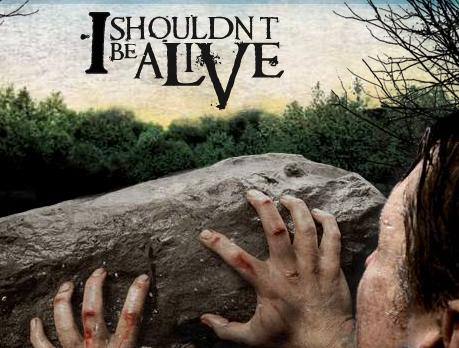
I like to watch this TV show, “I Shouldn’t Be Alive.”

Do you remember those Choose Your Own Adventure books, where the reader had to make a choice at the end of a chapter? Like, “If you follow the troll into the angry dragon’s mouth of doom, turn to page 73. If you marry the princess and ride your pet unicorn into the land of rainbows, turn to page 94.” And you always had to wonder, what kind of dumbass follows the evil troll? Huh? Who would possibly do that?

The people on “I Shouldn’t Be Alive,” that’s who.

It’s the show where people make not just one bad decision, but a whole series of them. Go hiking into the Grand Canyon? In July? With your grandfather? Who has one amputated leg? And bring no supplies? Except for a can of Diet Coke? AWESOME. Let’s do that.

That’s why I sometimes refer to the show by its alternate title, “No, You Really Shouldn’t Be Alive. You Should Just Go Away and Leave More Food and Water on This Planet For the Rest of Us.”

And yet, this weekend, as I made one incredibly poor decision after another, I could have taken a starring role on the show.


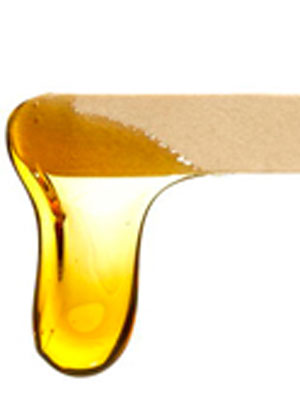
Bad decision #1. Purchase an at-home waxing kit. I realize you might be saying, “But Maggie. There is a reason that salons hire licensed professionals to do this kind of work.” And I say nonsense! It’s just pulling hair out by the root. With boiling-hot wax. Anyone can do this!

Bad decision #2. Directions? Who has time to read directions? I live in a fast-paced modern world.

Bad decision #3. Oh, was I supposed to do something with that bottle of pre-waxing oil? The one that prevents the wax from adhering permanently to your skin? Whatever.

Bad decision #4. Instead of doing a sample, I should probably just put all the wax on at once. That way if it really hurts, I won’t chicken out. I’ll be fully committed.

And fully committed I was.

I attempted to pull off the hardened wax, but it had already climbed down into my pores and formed a union with my skin. With every patch of wax ripped away, a chunk of my epidermis went with it.

I have to be honest. I have never felt such pain in my life. And that’s coming from someone who donated her bone marrow. Like, doctors shoved knitting needles in my pelvis and sucked out a liter of the junk that is INSIDE MY BONES — and that procedure was far more relaxing and comfortable than this at-home wax.

It was a frustratingly slow process that went like this: Claw at a tiny piece of wax. Bleed. Cry. Tremble. Will myself to not faint.

The more I shook, the more I began to sweat. And the more I sweat, the more the wax melted against my skin. And with melted wax, it was like performing a Brazilian with saltwater taffy.

I weighed my options. The hospital was less than a block away. I could throw on a robe and walk there. But then I would always be the girl who went to the ER with a wad of wax on her vagina. Another option was to simply walk around with a wad of wax on my vagina. Forever.

I called a very close friend and blurted out, “I’m having a waxing emergency.” I described the problem.

“Just put a wick in it,” she said.

That girl is no longer my friend.

Finally, using a very complicated combination of tweezers, scissors, cotton balls, ice cubes, nail polish remover and Goo Gone, I rid myself of the wax. And most everything else. In the end, I looked like a skinned baby seal and I am no longer able to wear pants.

I know, I know. I shouldn’t have tried this at home. I shouldn’t have ignored the directions. And I really, really shouldn’t be alive.


A Walk in the Dark

April 8, 2012

I wanted to take my dog for a walk. I spent the whole day inside finishing an assignment, and I desperately needed to stretch my body.

“I’ll go with you,” The Husband said. “It’s dark.”

“No, no. I’m fine. I’m wearing white clothes so cars can see me.”

“Let me go with you,” he said.

“No, no. The moon is full.”

“Let me go with you.”

And so I did.

Palm Springs is always quiet, but once you get off the main street, our neighborhood is particularly still. That’s why the man was immediately out of place.

The Husband and I were on the outskirts of a park. The man was across the street, crouched on the ground, outside of a low brick wall. He hammered something. The metal-on-metal sound was almost like a lighter that had run out of fuel — “flick, flick, flick” — but deeper, heavier, more resonance.

The Husband and I both craned our necks to get a better look at the guy. And that’s when he turned and looked back at us. Terror ricocheted through my body. Suddenly it was difficult to breathe.

“WALK,” said The Husband in a voice I’ve never heard before.

Everything in my body told me to not run. It would make the man mad. I forced my feet to maintain a normal pace.

“I told you to WALK,” The Husband said. “GO.”

The nearest car headlights were at least a mile away. Only one house had a light on, but that was two blocks away. My dog has such short legs.

The man was behind us.

“Hey,” he yelled. And we kept walking.

Palm Springs is incredibly dark at night. It’s so people can see the stars. It’s something I’ve loved ever since I moved to the desert — the darkness here is so much more complete and sincere than nights in the Midwest.

“I said HEY.”

I cursed myself for wearing white. In darker clothes, maybe I could have slipped into the park. It would have been easy. But with the stupid moon grinning down on me, reflecting my T-shirt like a Crest smile, there was no way.

“Do you know where Ramon. I mean, Raymond Cree,” the man said. He didn’t speak in complete sentences. None of his words made sense, but they had the tone of a threat. “Tell me Vista Chino.”

“No,” The Husband said. We continued walking.

My body had a visceral reaction to the man, who was now an arm’s length behind us. My heart trembled on the outside layer of my skin. Heat rolled through my body like lava. A very clear voice inside said, “Walk normal. Keep steady. Stand tall.”

I understood that no matter what happened, I was ready to accept it. I turned around to face the man.

“That way,” I said and pointed in the opposite direction. “Go the other way.”

We didn’t see the man go. We just looked behind us, and he was no longer there. At that point we quickened our step. We expected the man to reappear at any moment. But then he didn’t, and we were home.

“I’m sorry I yelled,” said The Husband. “Do you think I overreacted?”

“No,” I said. “Not at all.”


Pinkeye from Vishnu

March 21, 2012

I hesitate to even tell people that I went to an ashram in India on my trip around the world, because it brings up the inevitable comparison.

“OMG, you’re like ‘Eat, Pray, Love!'”

I mean, there are worse things to be likened to than an Oprah-endorsed, best-selling phenomenon. But I wish we could acknowledge and honor the stories of women without comparing them all the time. My journey was not Elizabeth Gilbert’s journey, and the road she traveled wasn’t mine. We just happen to be two women with backpacks.

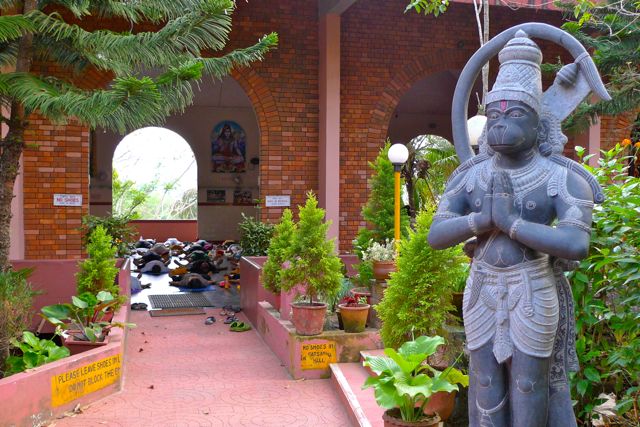
Still, it happened that I ended up at an ashram in India.

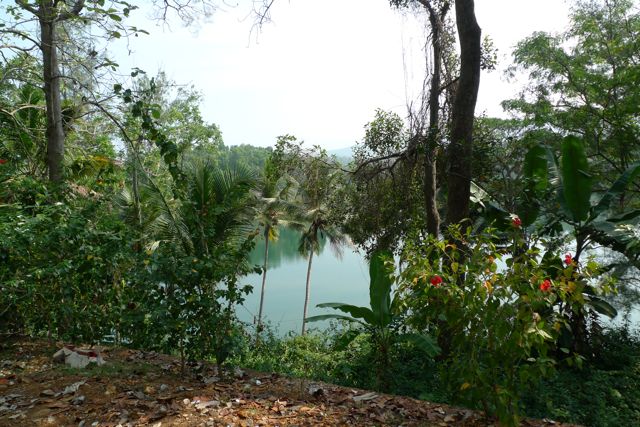
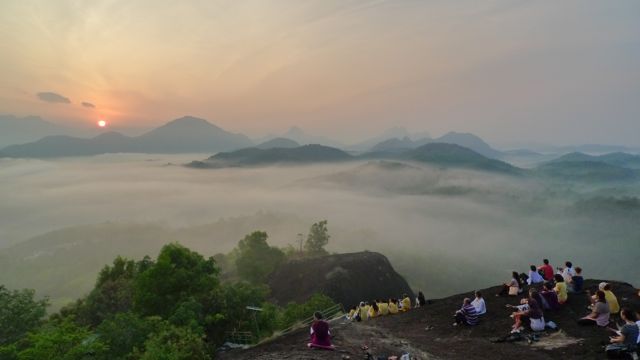
It was located in the southern part of India, where vines and palms tangle around swampy backwaters. There was supposedly a zoo nearby, even though there wasn’t a town or a city in the vicinity. But every sunrise we could hear the lions roar.

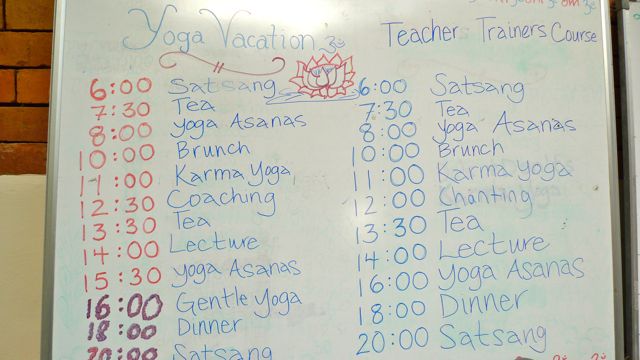
I wish I could say my original intention was spiritual enlightenment. But I was coming off nine months of constant travel, followed by a blurry string of beach parties in Goa. More than enlightenment, I needed a purpose. I needed a schedule. I needed to lay on a mat and stretch my limbs to the sky and breathe. So I went.

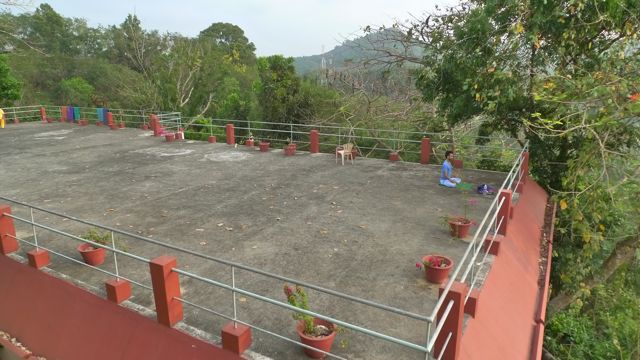
It took three rickety buses through the countryside, one long walk and a wheezing rickshaw up a ribbon-like road, but I finally got there.

I fully committed myself to the ashram. I didn’t bring any forbidden goods, like alcohol, onto the property. I didn’t sneak out for a smoke. I didn’t skip any lessons. I didn’t half-ass it.

Instead, I greeted the blackness of morning with chants of “Jai Ganesh” until the sun rose.

I joined 200 people in a chorus of “Om”  until the resonance became so deep and strong that it vibrated the chambers of my heart.

I sat crosslegged on the floor, scooped rice and runny lentils with my hand, ate in silence.

I slept naked under a mosquito net.

And then I waited.

I waited for that moment — enlightenment, clarity, bliss. Whatever it is that people are supposed to feel at an ashram, I wanted to feel it too.

I did my part, after all. I was present. I was open. I was expectant. And when it comes to spirituality, isn’t that the bulk of the battle? Just showing up?

This was also a particularly vulnerable time, since I had lost my mother just two months prior. So I did a lot of meditating and marinating while I let grief unzip me. If there was ever someone ripe for a divine moment, it was me — literally down on my knees in a temple, pleading for something, anything.

When those prayers went unanswered, I turned my efforts outward. I climbed mountains. I sang to the sun as she tossed scarves of color into the sky. I turned my face up to the heavens and said, “Come on. Give me everything you’ve got.”

Nothing happened.

I thought it would come in a bolt of lightning or something equally dramatic. I figured it would be like the conversion of  Saul to Paul in the New Testament, a familiar story to every classically-trained Christian. Basically, Saul was traveling the streets of Damascus when he saw a bright flash of light and the resurrected figure of Jesus. The event caused Saul to go temporarily blind, at which point he changed his name to Paul and became (arguably) the greatest disciple of all. It was amazing. The dude went blind!

Meanwhile, I begged for something to happen. And Vishnu only gave me pinkeye.

After I left the ashram, I traveled to Kanyakumari, the town at the very bottom tip of India. In a country full of spiritual places, Kanyakumari is among the most special and sacred. This is the confluence of three major bodies of water — the Arabian Sea, the Bay of Bengal and the Indian Ocean.

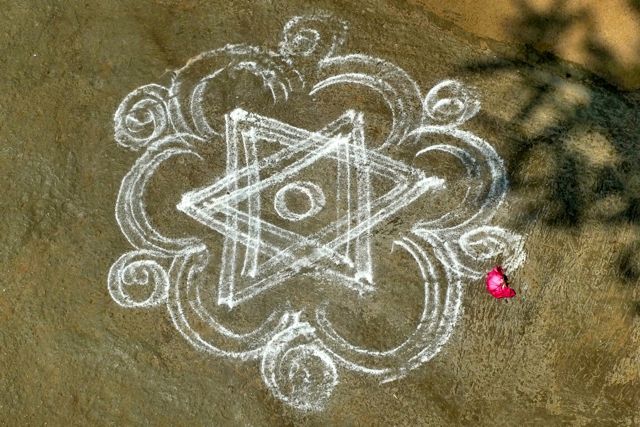
It is where millions of travelers, missionaries and pilgrims have entered the continent. It is where Mahatma Gandhi’s ashes were released back into the world. And according to Hindu legend, this is where an avatar of Parvati was set to marry Siva. When he failed to show up for his wedding, the rice that was supposed to feed the guests washed ashore, turning into the rocks that form the beach today.

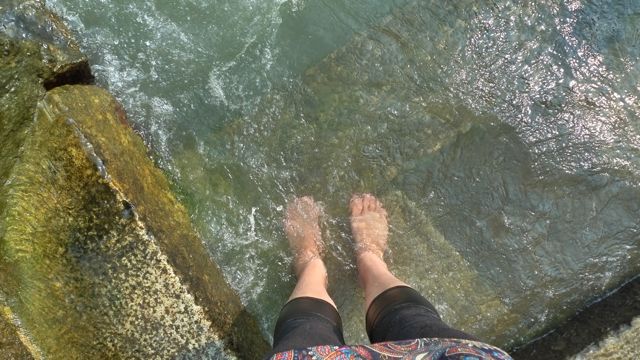
I hiked up my leggings and waded into the water. It was as warm as tears. Around me, pilgrims tossed pink flowers into the waves, where they drifted out into forever.

Maybe enlightenment never really comes in a force of nature. Maybe it is just the gentle intersection of waves. It ebbs and flows, taking things away, returning again, washing over all of us.

—–

This post is part of the Scintilla Project, a fortnight of storytelling.